Digital Health · Health Tech
Why the same prescription has four different prices
The price of a medication isn't one number. Understanding why helps you pay less for the same box.
If you’ve ever filled the same prescription at two pharmacies and paid noticeably different amounts, you weren’t imagining it, and neither pharmacy was necessarily doing anything wrong.
A medication doesn’t have a price. It has several, and which one you pay depends on things that are rarely explained at the counter.
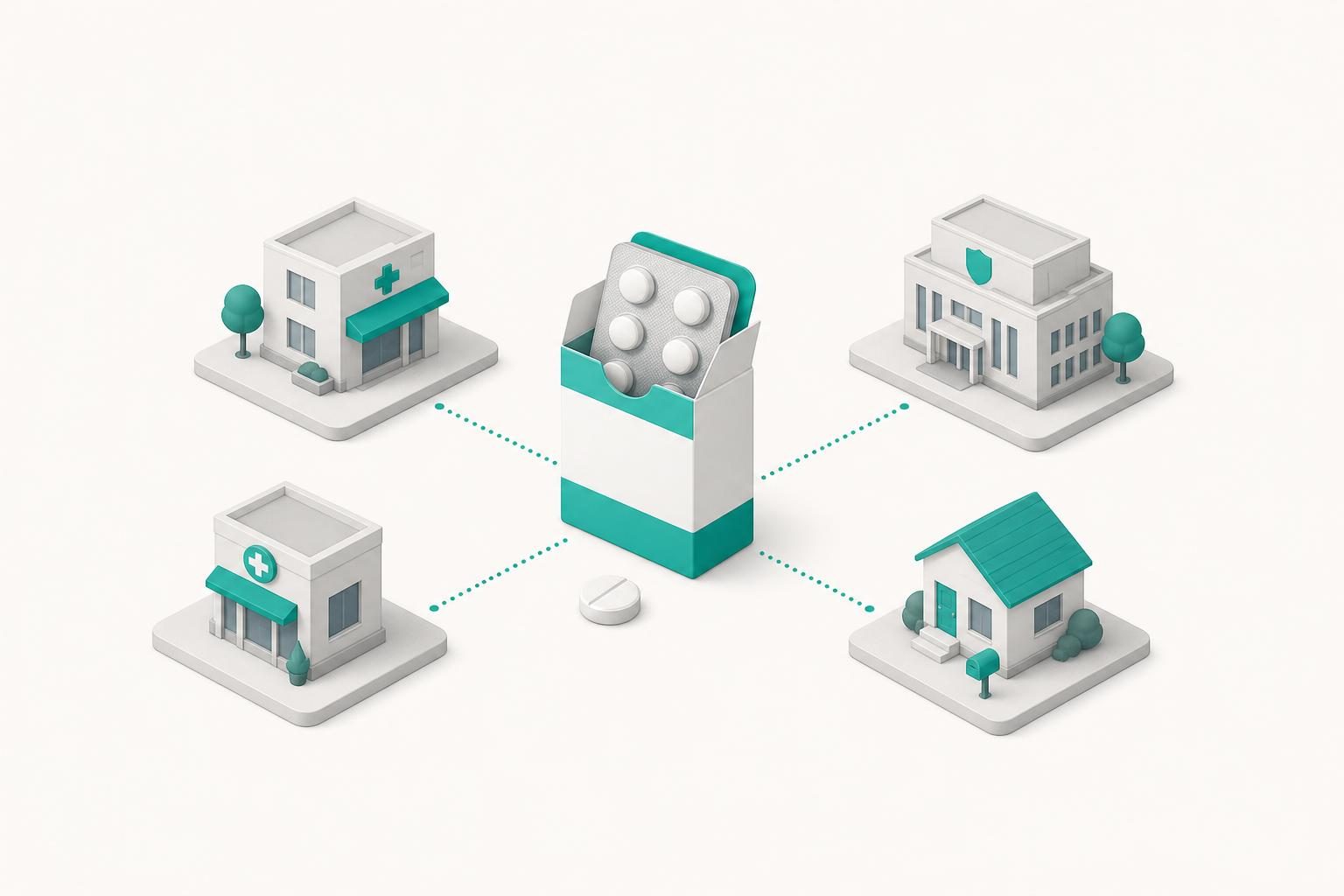
The prices sitting behind one box
What the pharmacy paid. Acquisition cost, which varies with the supplier, the manufacturer and the volume the pharmacy buys. A small independent and a national chain often pay different amounts for the identical product.
The dispensing fee. A flat professional fee for preparing and checking the prescription. It’s set by the pharmacy, it varies, and it’s the part most people don’t realise is separate from the drug itself.
What your plan has agreed to pay. If you’re covered, your insurer has a negotiated rate, and your share may be a percentage, a fixed co-pay, or everything until a deductible is met.
The cash price. What you’d pay with no coverage — and occasionally less than the insured price for inexpensive generics, which surprises people who assume using insurance is always cheaper.
Four numbers, one box. The spread between them is where the money you didn’t need to spend usually hides.
Questions that are entirely reasonable to ask
Pharmacy staff answer these every day. None of them is awkward:
- “Is there a generic?” Generics contain the same active ingredient at the same strength and must meet the same standards. For many long-term medications the saving is substantial.
- “What’s the cash price?” Worth asking even when insured, particularly for cheap generics.
- “What’s your dispensing fee?” It’s a legitimate question and it varies between pharmacies.
- “Would a larger supply cost less per month?” One dispensing fee across ninety days rather than three across ninety days — if your prescription and plan allow it.
- “Is there a different drug in the same class my plan covers better?” Your prescriber decides, but pharmacists often know which alternatives are covered and can raise it with them.
Where independents genuinely differ
Independent pharmacies are frequently assumed to be more expensive than large chains. On some items they are. On others they are not, because they set their own fees rather than following a national schedule, and because they’ll often order a specific generic for you.
What they reliably offer is continuity: someone who knows your history, notices an interaction, and has time for the conversation. For anyone managing several medications, that is not a small thing — it’s the part of pharmacy that catches problems before they become appointments.
The transparency problem, plainly
None of the above is secret. It’s just not presented anywhere you can see it before you commit.
You can compare the price of almost anything else before buying. For prescriptions, most people find out at the till, after the pharmacist has already done the work, at which point very few of us say “actually, I’ll try elsewhere.”
That asymmetry is the real issue. It isn’t that pharmacies are hiding something — it’s that the information arrives too late to act on, and the people least able to absorb an unexpected cost are usually those filling the most prescriptions.
What to do with this
Three habits cover most of it:
- Ask about the generic every time a new medication is prescribed.
- Compare before you commit for anything you’ll take long-term. The first fill is the moment to shop; the tenth is not.
- Keep your pharmacy informed of everything you take, including over-the-counter items. Price is worth optimising. Safety is worth more.
PharmaRxHub is a digital pharmacy marketplace with transparent medication pricing, comparisons and prescription delivery. More at pharmarxhub.com.